
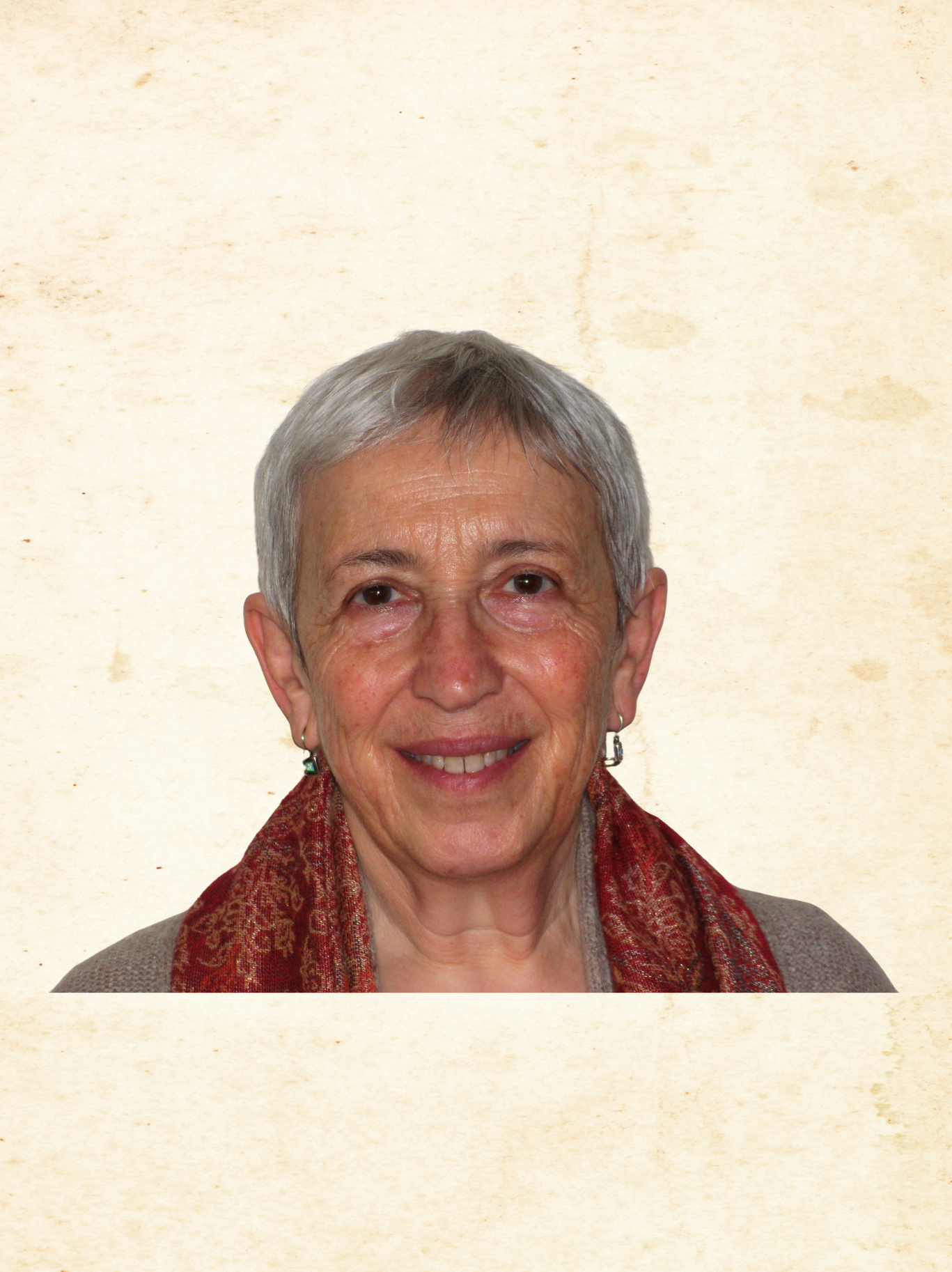
Prof. Miriam Frenkel
About
 miriam.frenkel@mail.huji.ac.il
Miriam Frenkel is a Professor Emerita at the Hebrew University of Jerusalem and a prominent scholar of medieval Jewish history in the lands of Islam.
She currently serves as the Head of the Ben-Zvi Institute for the Study of Jewish Communities in the East and as President of the Society for the Study of Judeo-Arabic Culture.
Her research focuses on the social and cultural history of Jews in the Mediterranean world, often utilizing the Cairo Geniza documents to reconstruct the daily lives, economic networks, and intellectual contributions of Jewish communities in medieval Islamic societies
Lecture Abstract:
In his classic work The Gift: Forms and Functions of Exchange in Archaic Societies (1925), Marcel Mauss demonstrated that gifts, seemingly given voluntarily, are in fact an integral part of economic and commercial systems, governed by clear material interests and considerations. Throughout history, various societies have employed the exchange of gifts to achieve a wide range of goals—from appeasing the gods to maintaining amicable and stable trade relations, or enhancing prestige and social standing. Since Mauss, historians and anthropologists such as Marshall Sahlins, Claude Lévi-Strauss, Georges Duby, Barbara Rosenwein, and Natalie Zemon Davis have explored the phenomenon of the gift, yielding profound insights into large social and economic systems along history. The publication of the extensive corpus of hundreds of documents from the Cairo Genizah concerning the medieval trade conducted by the Jews of Egypt and North Africa with India (India Book, vols. I–IV[b]) now enables us to examine the role and function of gift exchange within this commercial network. In my lecture I will examine several basic questions: Who gave gifts to whom, and under what circumstances? What were the expectations of reciprocity, and within what timeframe? Was there an underlying logic or norm governing gift-giving? which commodities in this trade were deemed suitable for gift exchange? Were the selected gifts perceived as prestigious, useful, or perhaps exotic?
What terminology did contemporaries use to assess gifts? And did the economy of gifts also generate tensions and crises? Finally, I will seek to situate the economy of gifts in the medieval India trade along the spectrum of reciprocity ranging from the altruistic to the self-interested pole, suggested by Marshall Sahlins.
Contact info
